JellyBlue Gummies (Everyday Pain - Discomfort)
JellyBlue Gummies are presented as a men's dietary supplement in a convenient blue-raspberry gummy format. Current online product information describes a daily serving of one gummy and identifies several ingredients intended to support men's vitality and wellness.
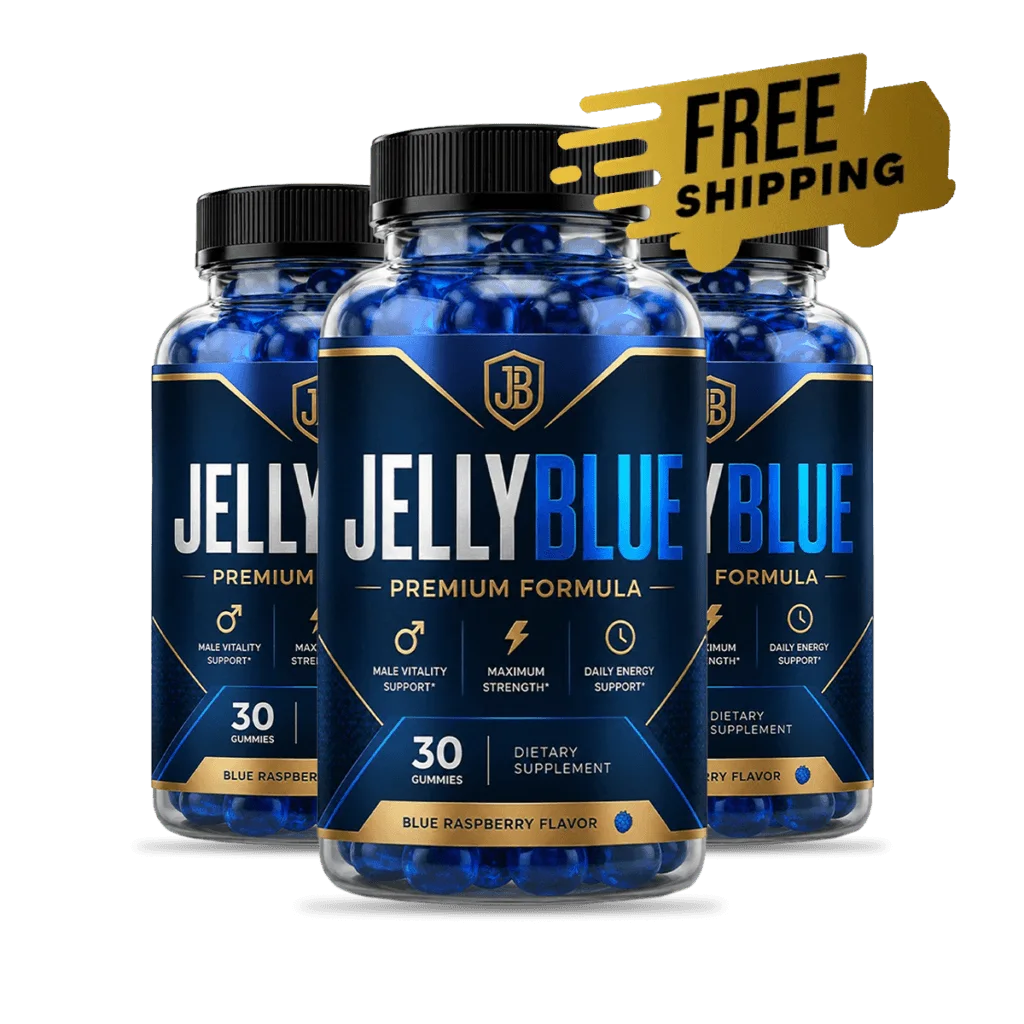
JellyBlue Gummies (Male Sexual Wellness): A Convenient Daily Addition to Your Routine for Energy, Vitality & General Well-Being!
🚀EXCLUSIVE SAVINGS AVAILABLE – CLICK HERE TO GET YOURS TODAY 🚀
Pain is one of the most common health complaints people experience, ranging from occasional muscle soreness and exercise-related discomfort to persistent pain associated with injuries or chronic medical conditions.
Because pain can affect sleep, mood, energy, mobility, and quality of life, many people look for nutritional supplements that might support their overall wellness.
JellyBlue Gummies are marketed as a men's vitality and wellness supplement rather than as a pain-relief medicine.
Current product information describes JellyBlue as a once-daily gummy containing ingredients such as Tongkat Ali, maca, ashwagandha, L-arginine, and other botanical or nutritional compounds.
The manufacturer states that the product is intended to support men's vitality, energy, and daily wellness, and also states that it is not intended to diagnose, treat, cure, or prevent disease.
That distinction is important when discussing pain. A supplement marketed for energy, vitality, circulation, or general wellness should not automatically be considered a treatment for headaches, arthritis, back pain, nerve pain, muscle injuries, or other painful conditions.
Understanding Pain
Pain is the body's way of signaling that something may be wrong. It can occur after an injury, inflammation, infection, physical strain, surgery, or changes affecting nerves and other tissues.
Pain is often divided into several broad categories.
Acute pain usually develops suddenly and lasts for a relatively short period. Examples include pain after exercise, a minor injury, dental treatment, or surgery.
Chronic pain continues or repeatedly returns over a longer period. It can be associated with conditions such as arthritis, persistent back problems, nerve disorders, or other medical conditions.
Musculoskeletal pain involves muscles, joints, ligaments, tendons, or bones. It may occur after physical activity, repetitive movement, poor posture, or injury.
Neuropathic pain results from irritation or damage involving nerves. People may describe it as burning, tingling, shooting, stabbing, or electric-like.
Because these types of pain can have very different causes, the appropriate treatment can also be very different.
What Is JellyBlue Gummies?
JellyBlue Gummies are presented as a men's dietary supplement in a convenient blue-raspberry gummy format. Current online product information describes a daily serving of one gummy and identifies several ingredients intended to support men's vitality and wellness.
Depending on the product information being referenced, the formulation has been described with ingredients including Tongkat Ali, maca root, ashwagandha, L-arginine, horny goat weed, beet root, and grape seed extract.
A recent company announcement also describes a 30-count gummy and provides additional formulation information.
These ingredients are associated with areas such as stress, energy, circulation, exercise performance, and men's wellness. However, that does not establish JellyBlue as a painkiller.
🚀EXCLUSIVE SAVINGS AVAILABLE – CLICK HERE TO GET YOURS TODAY 🚀
Can JellyBlue Gummies Relieve Pain?
There is an important difference between supporting general wellness and treating pain.
JellyBlue should not be presented as an established treatment for pain unless there is high-quality clinical evidence showing that the finished product is effective for a particular painful condition.
The available product information itself does not position JellyBlue as a pain medication.
Some individual ingredients in supplements may have been investigated for inflammation, stress, exercise recovery, or other areas that can indirectly relate to how someone feels.
But evidence concerning an individual ingredient does not automatically prove that a particular multi-ingredient gummy will reduce pain.
This is especially important because the amount, extract type, manufacturing process, and combination of ingredients can influence the effect of a supplement.
Ashwagandha and Pain-Related Wellness
Ashwagandha is one of the better-known botanical ingredients associated with stress and general wellness. Research has investigated its effects on stress, sleep, and other aspects of health.
Stress and poor sleep can make pain feel more difficult to manage. Someone experiencing ongoing stress may also have muscle tension, fatigue, or reduced resilience.
Improving sleep and managing stress can therefore be useful parts of an overall wellness strategy.
However, this should not be confused with evidence that an ashwagandha-containing gummy directly treats a medical pain condition.
Anyone considering ashwagandha should also consider potential medication interactions and individual medical circumstances.
L-Arginine, Circulation, and Discomfort
L-arginine is an amino acid involved in pathways that produce nitric oxide, a molecule involved in blood-vessel function.
Because circulation can be relevant to physical performance and cardiovascular function, L-arginine appears in many men's wellness and exercise supplements.
But circulation support is not the same thing as pain relief.
A person experiencing persistent leg pain, chest discomfort, severe headaches, or other unexplained symptoms should not assume that a circulation-focused supplement is an appropriate treatment.
Unexplained or severe pain deserves medical evaluation.
Exercise, Muscle Soreness, and Recovery
Another reason people may associate wellness supplements with pain is exercise recovery.
After unfamiliar or strenuous physical activity, muscles can become sore. This is commonly known as delayed-onset muscle soreness, or DOMS. Rest, adequate hydration, sufficient nutrition, gradual progression of exercise, and appropriate recovery are generally more important than relying on a single supplement.
A men's wellness gummy may be convenient as part of someone's supplement routine, but it should not be marketed as a proven solution for exercise-related pain unless clinical evidence supports that specific claim.
If pain is severe, persistent, associated with significant swelling, weakness, loss of movement, or an injury, professional evaluation may be appropriate.
🚀EXCLUSIVE SAVINGS AVAILABLE – CLICK HERE TO GET YOURS TODAY 🚀
Pain, Sleep, and Energy
Pain and sleep can influence one another.
Someone experiencing pain may sleep poorly. Poor sleep can contribute to fatigue, irritability, reduced concentration, and lower tolerance for discomfort. At the same time, stress and inadequate recovery may make existing discomfort feel more difficult to manage.
This is one reason a comprehensive approach to wellness can be more useful than focusing on a single supplement.
Rather than asking only whether a product "works for pain," it may be more useful to consider the broader questions:
Is the pain temporary or persistent?
What appears to be causing it?
Is sleep being affected?
Is stress contributing to muscle tension or fatigue?
Is physical activity helping or worsening symptoms?
Are medications or other supplements involved?
Does the pain require medical assessment?
Why Ingredient Claims Need to Be Interpreted Carefully
Supplement marketing can sometimes make an ingredient sound equivalent to a medication.
That is not necessarily the case.
An ingredient can have laboratory research, small human studies, or research involving a different dose or formulation without establishing that a particular commercial product treats a medical condition.
This distinction is particularly relevant for JellyBlue because different online pages have provided different descriptions of the formulation and its ingredients. A recent company announcement describes a formulation involving seven named components, while other online product pages describe different ingredient lists.
Consumers should therefore check the actual product label accompanying the product they are purchasing rather than relying solely on third-party descriptions.
JellyBlue Is Not a Substitute for Pain Treatment
People experiencing significant pain should be cautious about replacing medical treatment with supplements.
Pain can sometimes be a symptom of an underlying condition that needs attention. For example, persistent pain can be associated with musculoskeletal disorders, nerve problems, infections, injuries, or other medical conditions.
Using a supplement while ignoring the underlying cause could delay appropriate care.
This is particularly important when pain is new, severe, worsening, unexplained, or accompanied by other concerning symptoms.
When Pain Requires Medical Attention
Seek prompt medical advice for pain that is:
Severe or rapidly worsening
Associated with significant trauma or injury
Accompanied by weakness, numbness, or loss of function
Persistent without an obvious explanation
Associated with fever or significant swelling
Repeatedly interfering with sleep or everyday activities
Associated with chest pressure, difficulty breathing, fainting, or other emergency symptoms
These situations should not be managed simply by starting a dietary supplement.
What Consumers Should Look for in a Supplement
Anyone considering JellyBlue or another supplement should examine the label carefully.
Look for:
Ingredient amounts. Knowing that an ingredient is present is less useful than knowing how much is included.
Serving instructions. Follow the manufacturer's recommended serving rather than assuming that taking more will produce better results.
Warnings and contraindications. Supplements can interact with medications or may not be appropriate for everyone.
Manufacturing information. Consider whether the manufacturer provides meaningful information about quality control and testing.
Evidence for the finished product. Research on an individual ingredient is not the same as a clinical trial of the final product.
🚀EXCLUSIVE SAVINGS AVAILABLE – CLICK HERE TO GET YOURS TODAY 🚀
Medication Interactions Matter
People taking prescription or over-the-counter medicines should not assume that a "natural" supplement is automatically risk-free.
Some botanical ingredients and amino acids can influence blood pressure, blood clotting, hormone pathways, thyroid function, or the effects of other medicines.
The product information itself recommends consulting a qualified healthcare professional, particularly for people taking prescription medications.
A pharmacist can be especially useful when checking whether a supplement could interact with existing medications.
The Bottom Line on JellyBlue Gummies and Pain
JellyBlue Gummies may be relevant to someone looking for a convenient men's wellness supplement, but it would be misleading to describe them as a proven pain treatment.
The product is marketed around men's vitality, energy, circulation, and general wellness rather than the treatment of pain.
Some of its ingredients have been studied in areas related to stress, circulation, energy, or general health.
Nevertheless, evidence for an individual ingredient should not automatically be interpreted as evidence that JellyBlue can treat a particular painful condition.
For occasional minor discomfort, appropriate rest, hydration, sleep, sensible physical activity, and evidence-based pain-management approaches may be more relevant.
For persistent, severe, or unexplained pain, identifying the underlying cause is more important than choosing a supplement.
In short, JellyBlue Gummies should be viewed as a men's wellness supplement, not as a replacement for established pain treatment or medical evaluation.
As with any dietary supplement, consumers should read the current product label carefully, follow the recommended serving
Speak with a healthcare professional if they have medical conditions, take medication, or are considering the product for a specific health problem.